Tag: wind

  • Weighing in on T&T’s 10% RE Target

    Weighing in on T&T’s 10% RE Target

    Trinidad and Tobago (T&T), has set an ambitious renewable energy (RE) target of 10% of installed capacity by 2021. This equates to approximately 200 MW given the combined installed capacity of the two islands is over 2000 MW of natural gas based power generation.

    T&T is the only nation in the western hemisphere, and the second in the world, that generates 100% of its electricity needs from natural gas. Therefore, unlike the other islands in the Caribbean T&T is already energy independent, since all the natural gas used is sourced locally through its sophisticated network of pipelines. As a consequence, T&T have seen the lowest and most stable electricity rates in the region over the last decade.

    Given that T&T is  already energy independent, the integration of renewables will have the effect of reducing the natural gas demand for electricity production and thereby increasing the levels available for export and/or for use in the well developed local petrochemical industry. This is now being championed by the energy sector as a means to increasing government revenues in a time when the nation is witnessing a significant decline in revenues and consecutive budget deficits.

    We decided to weigh in on the potential savings to be derived from this level of renewable energy integration. In order to do this we first had to assume a mix of renewable energy technologies. Since the objective is to use renewables as a means to reduce the consumption of a natural gas and thus increase government revenues, it thus implies that the 200 MW will come from utility scale renewable energy projects only.

    We therefore opted to break up the 200 MW into 120 MW of onshore wind, 60 MW of solar pv and 20 MW of waste to energy. No consideration is given to the technical feasibility of this RE mix. There are, however, ongoing discussions on the subject of undertaking solar and wind resource assessments and there are currently no known technical barrier limiting grid connection.

    As the based case, we looked at Jamaica, which has over 150 MW of utility scaled renewables connected to the grid, to formulate a case for wind and solar in T&T. In 2016, Jamaica commissioned 60 MW of wind and 20 MW of solar capacity at a cost of approximately US $200 million.

    If we use the 36 MW BMR Wind Farm in Jamaica, commissioned in 2016 at a cost of US $90 million, as an example then, 120 MW of utility scale onshore wind capacity should not cost T&T more than US $300 million in 2018, given that the capital cost of onshore wind fell by 20% between 2010 and 2017. Conservatively, 120 MW of wind can generate 285,000 MWh annually, thus avoiding the use approximately 2,850,000 MMBTU of natural gas annually for the production of electricity.

    Similarly, if we use the 20 MW Content Solar Farm in Jamaica, also commissioned in 2016 at a cost of US $63 million, then 60 MW of utility scale Solar PV should not cost T&T more than US $190 million in 2018, since the capital cost of solar PV fell by 68% between 2010 and 2017. 60 MW of solar can conservatively generate 95,000 MWh annually, thus avoiding the use of approximately 950,000 MMBTU of natural gas annually.

    There has been some discussion around the potential of a waste to energy (WtE) facility at the country’s largest landfill, located on the outskirts of the capital city. The Solid Waste Management Company (SWMCOL) estimates that the landfill receives approximately 1000 tonnes of uncharacterized waste daily. We estimate that a 20 MW WtE facility can be developed at the proposed site to produce energy for the national grid.

    Using the information on the Solid Waste Authority of Palm Beach County Renewable Energy Facility 2 (REF2), a 100 MW mass burn WtE facility commissioned in 2015 at a cost of US $672 million, we assume, therefore, that a similar facility rated at 20 MW should not cost T&T more than US $150 million. Given that a mass burn WtE facility is a steam power plant at its core, then a 20 MW plant should generate approximately 150,000 MWh annually and thus avoiding the use of approximately 1,500,000 MMBTU  of natural gas annually.
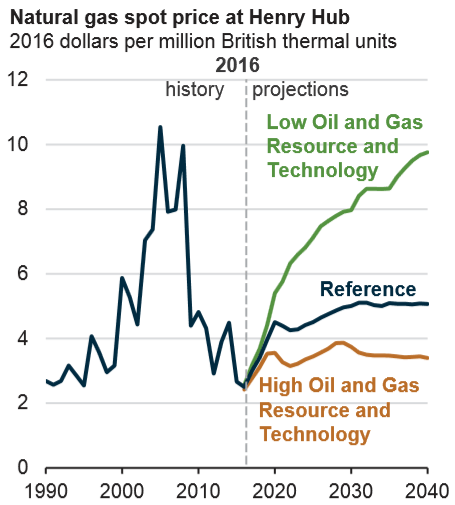
    natural gas price projections

    Therefore, from our selected portfolio of renewables we see that the potential exist to avoid approximately 5,300,000 MMBTU of natural gas annually. However, this does not come cheap as total investment cost estimates to US $640 million. The chart to the left shows the projected price of natural gas up to 2040.

    If we therefore look at the pessimistic case, we see that the price of natural gas in the US is projected to vary between US $3.00 to $4.00 over the remaining period and averages about US $3.50. Using this price we estimate a potential earning of US $18.6 million annually. The optimistic outlook, on the other hand, shows an average price of approximately US $6.80 resulting in a potential earning of US $36 million per annum.

    Both the pessimistic and the optimistic outlooks gave very large negative net present values using a 10% discount rate over a 20 year period. The optimistic case only gave a positive net present value for a discount rate of about 1%.  The analysis assumes that the projects would be government owned and did not take into consideration the operation and maintenance cost over the life of the project. Overall, it shows that the projected revenues to be derived from the sale of the avoided natural gas on the open market will not return the capital invested over a 20 year horizon.

  • Jamaica Surpasses 100 MW of Wind Power

    Jamaica Surpasses 100 MW of Wind Power

    Recently, two new wind farms (Wigton III and BMR) were commissioned onto the Jamaican electricity grid with a combined capacity of 60 megawatts (MW). This pushes the paradise Island beyond the 100 MW mark, now having total installed capacity of 102 MW.

    The Wigton III Wind Farmcarosel-3Wigton III is a 24 MW wind farm owned and operated by Wigton Windfarm Ltd (WWFL) – a wholly owned subsidiary of the Petroleum Corporation of Jamaica (PCJ). WWFL also own and operate two other farms – Wigton I and II rated at 20.7 and 18 MW respectively. The new facility consists of twelve G80-2.0 MW wind turbines, a 9.6 km 69 kilovolts (kV) transmission line, and a new substation constructed by the Spanish firm Gamesa.

    It is expected to reduce the national oil consumption by an additional 37,100 barrels per year, which can save the country more than JA$230 million annually, adding to the more than JA$3 billion saved by the country in the past 11 years through the operations of Wigton I and Wigton II, commissioned in 2004 and 2010, respectively. The expansion has brought Wigton’s total capacity to 62.7 MW, retaining its position as the largest wind energy facility in Jamaica and the English-speaking Caribbean.

    The BMR Wind Farm

    The BMR (Blue Mountain Renewables) is also a new wind farm, rated at 36.3 MW. It consists of eleven V112-3.3 MW wind turbines, a 18 km 69 kV transmission line and a substation constructed by dutch firm Vestas. The US$90 million project is the single largest private sector investment in renewable energy undertake to date in the Island. BMR will sell electric energy to the grid operator (JPS) at US12.9 cents per kilowatt-hour in accordance with their 20 years power purchase agreement.

    Bottom Line

    These two wind farm projects were selected as the lowest-price projects among 28 proposals offered in response to the OUR’s Request for Proposals (RFP) for the addition of 115 MW of renewable energy power generation capacity in 2012. Given that Jamaica has now gained a decent track record of successfully commissioning wind projects, then it is expected that at least two such wind farms should come online by the end of 2018.

    This is especially, in light of the recent announcement by the Minister of Science, Energy and Technology, Dr. the Hon. Andrew Wheatley, during the 2016/17 Sectoral Debate that the Government will soon be advertising an RFP for the supply of an additional 100 MW of renewable energy.

  • Greening Nevis Electricity Sector

    Greening Nevis Electricity Sector

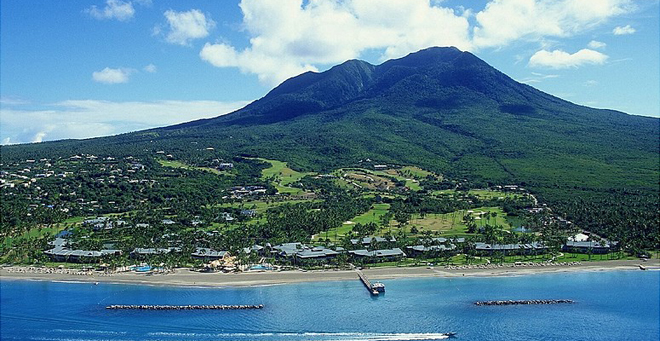
    Nevis, the sister isle of St. Kitts, is on its way to becoming carbon neutral in the near future. The two-island state is part of the Leeward Islands chain in the Eastern Caribbean. The small island of Nevis is home to a population of about 12,000 and it receives approximately 90 percent of its energy from imported oil products, with the remaining share coming from wind power. Nevis has its own electric utility, Nevis Electricity Company Limited (Nevlec), which owns and operates capacity of 13.4 MW with peak demand of around 9 MW and a base load of 5 MW.

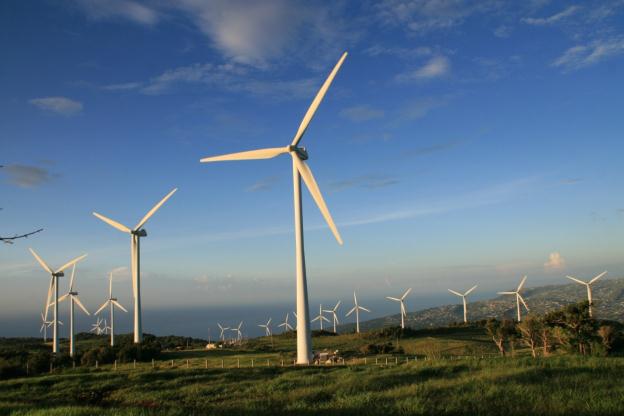
    Maddens Wind FarmIn 2010, Windwatt Nevis Ltd. (a private developer) installed a 2.2 MW wind park at Maddens Estate. The Maddens Wind Park, which consist of 8  Vergnet 275 kW wind turbines, supplies energy into Nevlec’s 11kV distribution grid.  Nevlec is obligated to purchase up to 1.6 MW of energy from the wind park according to the Power Purchase Agreement (PPA) between the two companies.

    With wind power experience under its wings, Nevis is now pushing to exploit its vast geothermal energy potential. The  Nevis Investment Agency (NIA) is currently welcoming proposals from potential developers with strong financial backing for the development of geothermal. The exploration phase has been completed and it is anticipated that least a 10 MW geothermal plant can be constructed in the not too distant future.

    Geothermal SourceIf, or when, this is achieved Nevis will be uniquely placed within the sub-region as a low cost, stable and renewable energy supplier. This project would have many positive benefits for the island including reduction in the cost of electricity; increase employment; energy security; improvement in the investment climate; significant revenue generation from royalty payments, electricity sales domestically including to St. Kitts and potentially neighboring islands. The project would have strong linkages to other sectors such as tourism and agriculture for heating purposes.

  • XenogyRE’s humble beginnings

    XenogyRE’s humble beginnings

    The motivation to start XenogyRE really originated out of my love for and interest in energy – clean, renewable and sustainable energy – and thus the name.

    My primary interest in energy sprung from my love of physics and by extension electronics and electrical, all of which I was exposed to at Holmwood Technical High School located in the cool hills of Christiana, Manchester (congratulations to the girls for reclaiming their title as the 2013 ISSA GraceKennedy Girls Champs).

    Growing up I was never the avid reader (or writer) of any form of social commentary. Throughout secondary school and the three years I spent pursuing an undergraduate degree in electrical and computer engineering at the University of the West Indies, I was always more interested in crunching numbers and read and wrote only as required by the courses I undertook.

    I think I have come a long way since writing my first article titled “solar basics” which I recently added to my collection of articles here on wordpress.com. Xenogy started out as a page on Facebook using the website’s note feature to tailor articles to, then, a small number of followers. I lost some content as a result of Facebook’s abrupt decision to block a plugin app that I was using to facilitate my content formatting, so I decided to move to weebly.com, where I had more control. I, however, opted soon after to migrate to wordpress.com as the burden of formatting and content management was taking away from the writing.

    Having edified myself up to the post graduate level, I am now at a junction where I desperately desire to share my acquired knowledge and interest in energy. This urge is tightly coupled with my love for the environment, my country (yeah man) and my progeny (she’s a bundle of joy), which have pushed me to the point that I spend long hours researching and writing articles on subjects ranging from solar photovoltaic to shale gas – when I should be sleeping (I glanced at the time (1:39 am) and sighed!).

    There is no doubt that Jamaica is in a very sticky position. Why? Because, energy is the force driving and sustaining all activities in our society and we are suffering from an energy crisis. Our current economic state is closely tied to our antiquated energy systems and until we (the people and the government) get serious and address the energy problem then we will never live to see the back of the IMF and the fiscal cliff will be towering above our heads.

    I do feel that we the people are the key to saving our nation. As a result, I have decided to zoom in on solar, wind and hydroelectric systems for the rest of the year (2013). I am doing this because I am convinced that solar, wind and hydroelectric (a mature technology) are the solutions we so desire in the land of sunshine, wind, and water (I am changing the phase from “land of wood and water”).

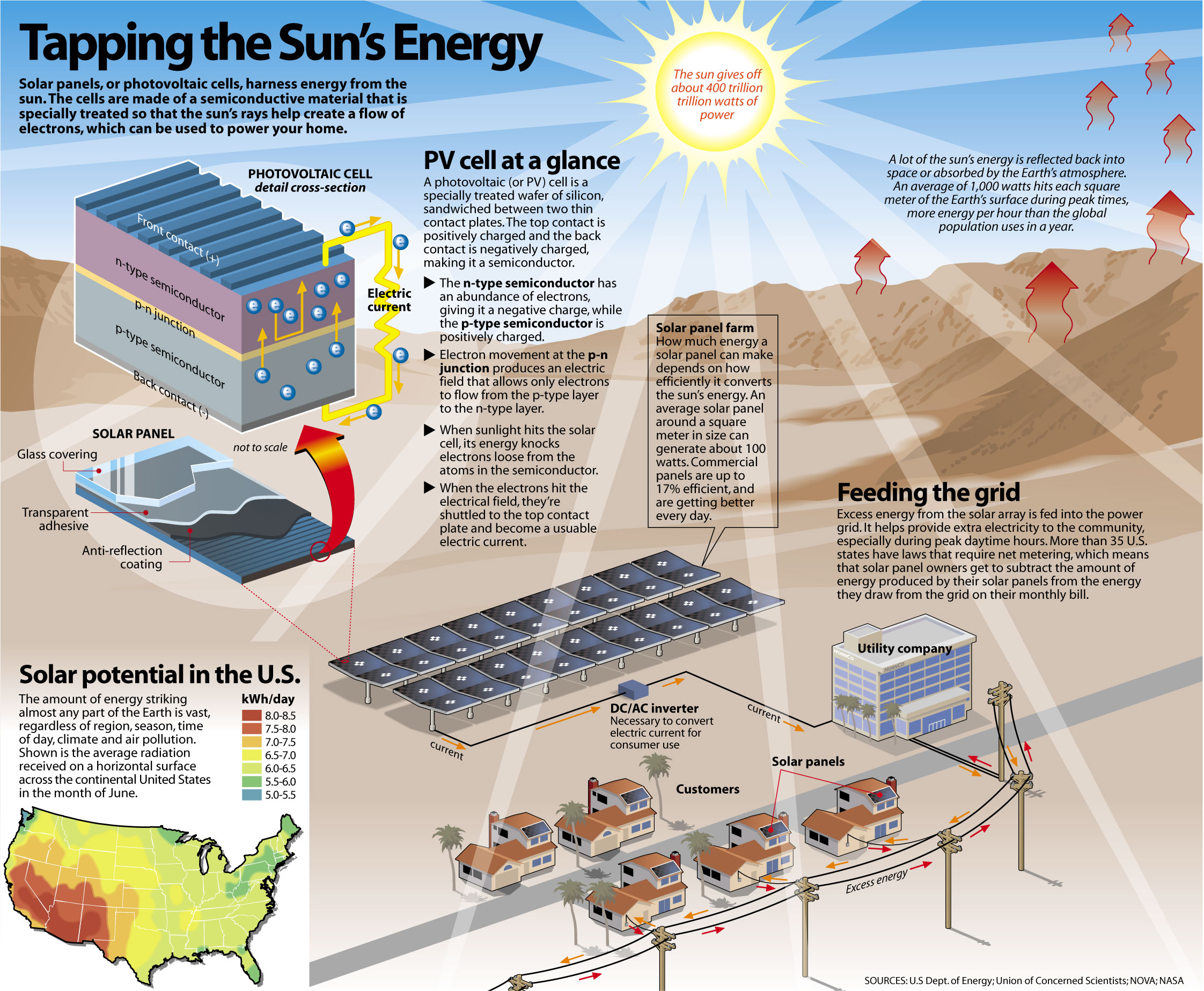
    I started out writing this post with the intention of sharing with you a simple infographic on solar pv systems, however the idea shifted and the title of the article changed, but I refuse to deprive you of the information so I decided to attach the infographic below (all credit goes to www.solarenergy.net). Edify yourself and feel free to leave a comment!

    SolarEnergySystemsFull