
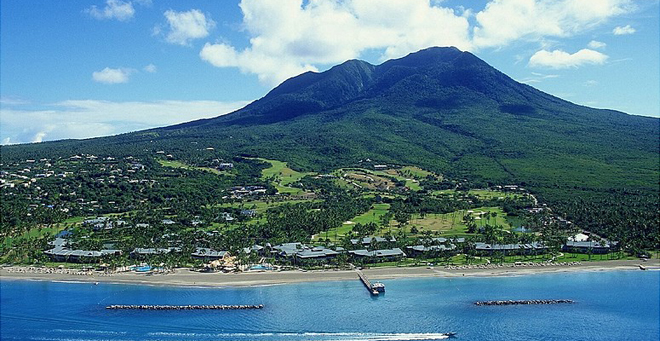
Nevis, the sister isle of St. Kitts, is on its way to becoming carbon neutral in the near future. The two-island state is part of the Leeward Islands chain in the Eastern Caribbean. The small island of Nevis is home to a population of about 12,000 and it receives approximately 90 percent of its energy from imported oil products, with the remaining share coming from wind power. Nevis has its own electric utility, Nevis Electricity Company Limited (Nevlec), which owns and operates capacity of 13.4 MW with peak demand of around 9 MW and a base load of 5 MW.
 In 2010, Windwatt Nevis Ltd. (a private developer) installed a 2.2 MW wind park at Maddens Estate. The Maddens Wind Park, which consist of 8 Vergnet 275 kW wind turbines, supplies energy into Nevlec’s 11kV distribution grid. Nevlec is obligated to purchase up to 1.6 MW of energy from the wind park according to the Power Purchase Agreement (PPA) between the two companies.
With wind power experience under its wings, Nevis is now pushing to exploit its vast geothermal energy potential. The Nevis Investment Agency (NIA) is currently welcoming proposals from potential developers with strong financial backing for the development of geothermal. The exploration phase has been completed and it is anticipated that least a 10 MW geothermal plant can be constructed in the not too distant future.
 If, or when, this is achieved Nevis will be uniquely placed within the sub-region as a low cost, stable and renewable energy supplier. This project would have many positive benefits for the island including reduction in the cost of electricity; increase employment; energy security; improvement in the investment climate; significant revenue generation from royalty payments, electricity sales domestically including to St. Kitts and potentially neighboring islands. The project would have strong linkages to other sectors such as tourism and agriculture for heating purposes.

 xenogyre.com