Category: Solar Energy

  • Guyana to install 33 MWp of Grid-scale Solar PV + Storage

    Guyana to install 33 MWp of Grid-scale Solar PV + Storage

    Guyana plans to install 33 MWp (megawatt peak) of grid-scale solar PV with battery storage in three of its un-interconnected (isolated) grids.

    The Government of Guyana (GoG), notwithstanding the Country’s evolving oil and gas sector, is committed to the development of a cleaner, greener, and more diversified energy matrix that is based on indigenous resources as outlined in its recently published 2030 Low Carbon Development Strategy (LCDS). Aside from having the capacity to utilize hydropower, wind, and biomass, Guyana has significant solar PV potential.

    Guyana has a long-term average global horizontal irradiance (GHI) of 5.0-5.9 kWh/m2 (kilowatt-hours per square meter) per day, based on satellite data. To put things in perspective, Germany, which has approximately 6.8% of the world’s installed solar PV capacity at the end of 2021, has very few locations with a GHI above 3.5 kWh/m2/day.

    As such, the GoG has given the Guyana Power and Light Inc. (GPL) the mandate to utilize NORAD funding to execute a national solar photovoltaic (PV) project in alignment with its plans to increase renewable energy penetration and grid stability on the power system. The project will be administered through the Inter-American Development Bank (IDB) with GPL being the execution agency

    The program is targeting eight projects totalling 33 MWp of solar PV in three of the country’s grids (Guyana has several un-interconnected grids) as follows:

    • 15 MWp with a 15 MW, 1hr Battery Energy Storage System (BESS) in the Linden Isolated Power System (LIS),
    • 8 MWp with an 8MW, 1hr BESS in the Essequibo Coast Isolated Power System (EIS), and
    • 10 MWp in the Demerara-Berbice Interconnected System (DBIS)

    The Linden project

    The Linden project will involve three (3) PV farms, each rated at 5 MWp. The plants are proposed to be located at Block 37 (in the vicinity of Bamia on the Linden Soesdyke Highway), Retrieve on the eastern side of the Demerara River, and Dacoura on the western side of the Demerara River.

    The Block 37 plant will be interconnected to the Amelia’s Ward 13.8 kV feeder, whilst the Dacoura plant will be interconnected to the Wismar 13.8 kV feeder. The Retrieve plant will, however, be interconnected directly to the 13.8 kV Retrieve substation.

    In addition, given the high level of penetration, a total of 15 MW (megawatt), with a minimum duration of 1 hour, of battery energy storage system (BESS) will also be installed and interconnected to the Linden system for stability purposes.

    The Linden project will initially satisfy approximately 38% of the demand with an average annual generation of 20.12 million kWh (kilowatt-hour). This will result in approximately 17,182 tons of CO2 (carbon dioxide) being avoided annually.

    The Essequibo Coast project

    The Essequibo Coast project will involve two (2) PV farms, rated at 4.4 and 3.6 MWp. The plants are to be located at Ondereeming and Lima Sands, respectively.

    The Onderneeming plant will be interconnected to the South 13.8 kV feeder, while the Lima Sands plant will be interconnected to the North 13.8 kV feeder.

    Much like the Linden project, given the high level of penetration, a total of 8 MW (megawatt), with a minimum duration of 1 hour, of BESS will be installed and interconnected to the Essequibo Cost system for stability purposes.

    The Essequibo Coast project will initially satisfy approximately 28% of the demand with an average annual generation of 12.36 million kWh, which will result in approximately 9,390 tons of CO2 being avoided annually.

    The Berbice Project

    The Berbice project will involve three (3) PV farms. A 4 MWp plant at Trafalgar on the west coast of the Berbice; a 2 MWp plant at Prospect on the east coast of the Berbice; and a 4 MWp plant at Hampshire in Corentyne, Berbice.

    The Trafalgar and Prospect farms will interconnect via an express 13.8 kV line to the 13.8 kV busbar at the Onverwagt and Canefield substations respectively. The Hampshire farm will interconnect to the Canfield F3 13.8 kV feeder.

    These plants will be a part of the DBIS and will satisfy a very small portion of the demand of the DBIS. However, the distributed nature of the project will serve to support the distribution network and reduce losses by supplying power closer to the end user.

    The plants will generate approximately 16.14 million kWh annually, which will result in the avoidance of 10,671 tons of CO2 annually.

    The estimated energy production and land requirements for each plant are shown in Table 1 below.

    SitePlant Size (MW)SystemYearly PV Energy
    Production (MWh)
    DC Capacity FactorLand Requirement
    (acres)
    Prospect, East
    Coast Berbice
    3.0DBIS4,8421815
    Hampshire, East
    Coast Berbice
    3.0DBIS4,8421815
    Trafalgar, West
    Coast Berbice
    4.0DBIS6,4591820
    Lima Sands,
    Essequibo Coast
    3.6EIS5,5601818
    Onderneeming, Essequibo Coast4.4EIS6,7951822
    Block 37, Linden5.0LIS6,7071515
    Retrieve, Linden5.0LIS6,7071515
    Decoura, Linden5.0LIS6,7071515
    Table 1

    Project Funding

    All eight projects form part of the Guyana Utility-scale Solar Photovoltaic Program (GUYSOL) and will be funded through the Norwegian Agency for Development Cooperation (NORAD) Fund. The non-reimbursable funding, which amounts to US$83.3 million is structured as shown in Table2:

    Table 2

    The deadline for commencement of the works under the program is two years, counted from the effectiveness of the Non-reimbursable Financing Agreement, which was signed on 13th September 2022 and made effective as of the 15th June 2022.

  • St. Lucia’s First Utility-Scale Solar PV Farm

    St. Lucia’s First Utility-Scale Solar PV Farm

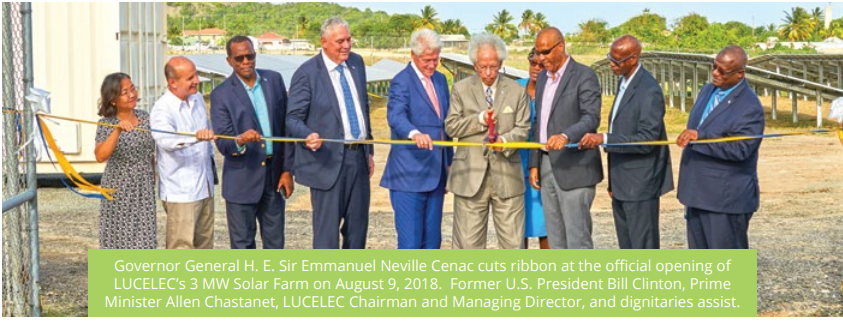
    On the 11th April 2018, the St. Lucia Electricity Services Limited (LUCELEC) – the sole electric utility company on the island – completed the commissioning of the island’s first utility-scale solar PV plant. The plant is rated at 3 megawatt (MW) and is located in La Tourney, Vieux Fort, just north of the Hewanorra International Airport. The plant was officially opened on the 9th August 2018.

    RFP and EPC

    This EC$20 million renewable energy project was funded by LUCELEC and is the result of a request for proposal (RFP) issued by LUCELEC in 2016 with the support of the Clinton Climate Initiative and Rocky Mountain Institute-Carbon War Room.

    On the 20th June 2017, LUCELEC signed a contract with the preferred bidder Grupotec to engineer, procure and construct (EPC) the 3 MW PV plant. The official groundbreaking ceremony was held on the 29th September 2017, however, construction started in November 2017.

    The plant consists of approximately 14,900 panels, which are distributed across three sites over a total of approximate 15 acres of land. It has a peak power rating (on the dc side) of 4 MW and is interconnected to the LUCELEC grid via two feeders emanating from the Vieux Fort substation at 11,000 volts.

    Plant Performance

    The solar farm was designed to generate 7 million kilowatt-hours (kwh) of electricity per year (at a capacity factor of 26.6%), which represented about 1.3% of the electricity generated from LUCELEC’s Cul De Sac Power Plant (the only other power plant on the island), at the time. Therefore it was projected to reduce the annual volume of fuel purchased by LUCELEC by more than 300 thousand imperial gallons and CO2 emission by 3800 metric tons. LUCELEC used approximately 19 million gallons of fuel per year, at the time.

    In 2018 the solar farm generated 5.01 million kWh of electricity, which resulted in fuel savings of 257.7 thousand imperial gallons of deisel and corresponding cost savings of EC$1.99 million. To date, it has produced 24.7 million kWh of electricity leading to a fuel savings of 1.27 million imperial gallons and cost savings of EC$9.1 million. Table 1 below shows the breakdown of the energy production, fuel savings and cost savings for 2019, 2020 and 2021.

    YearEnergy Produced
    (million kWh)
    Capacity
    Factor (%)
    Fuel Savings
    (thousand Imperial Gal)
    Cost Savings
    (EC$)
    20196.8426.0352.02.66
    20206.5825.0337.42.13
    20216.2623.8319.82.23
    Table 1

    Outlook

    Looking ahead, LUCELEC is working on plans to install a 7.5 MW/3 MWh utility-scale battery storage system in Vieux Fort to support the existing PV plant as well as to install another 10 MW solar PV plant with battery storage on the east coast of the island.

  • Cayman Island’s First Utility-Scale Solar PV Farm

    Cayman Island’s First Utility-Scale Solar PV Farm

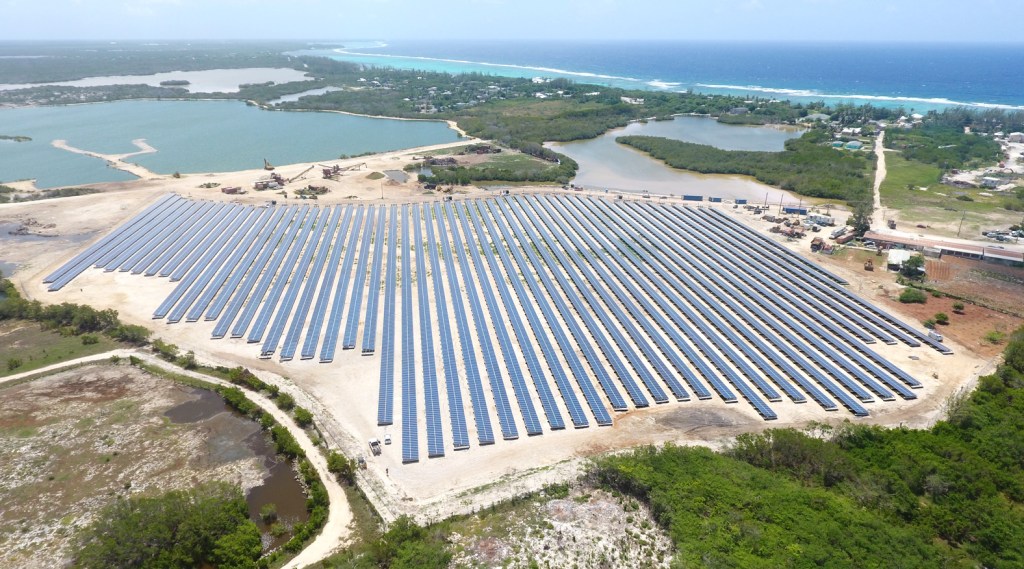
    The energization of a 5 megawatt (MW) solar farm located on 22 acres of lands at Block 43A Parcel 346 in Bodden Town, Grand Cayman in June of 2017 was recorded in history as the first utility-scale grid-connected solar photovoltaic (PV) power plant in the Cayman Islands.

    It is the result of an expression of interest (EOI) issued in 2011 by Caribbean Utilities Company Ltd. (CUC), the sole electric utility company on the island of Grand Cayman, for 13 MW of renewable energy. The EOI was subsequently revised to 5 MW (output) after the two winning bidders were unable to fulfill the requirements of the contractual term sheet.

    Entropy Cayman Solar Limited (“Entropy”), a subsidiary of Canadian investment firm Entropy Investment Management, was then selected and a term sheet was signed in October 2013. In 2015, Entropy signed a 25 year power purchase agreement (PPA) and Interconnection Agreement (IA) with CUC, which was approved by the then Electricity Regulatory Authority (ERA) – the electricity regulator, which has since been amalgamated with Communications Technology Authority (ICTA) and the Petroleum Inspectorate to the multi-sector regulator know as the Utility Regulation and Competition Office (OfReg).

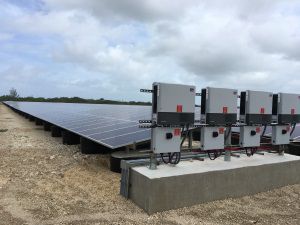
    The plant was fully commissioned into service in June of 2017, at a cost of US$9.7M, albeit six months behind schedule and over budget by US$2M. It consist of 21,690 poly-crystalline photovoltaic solar panels (305 Watts each), laid out into 52 rows and connected to five 1 megavoltamp (MVA) pad-mounted transformers via 173 30 kilowatts (kW) string inverters, and is interconnected to the national grid at 13.8 kV via the Bodden Town substation.

    On an annual basis it supplies 9.4 gigawatt-hours (GWh) of clean electricity and avoids over 4.2 tons of greenhouse gas (GHG) emissions. It employed over 40 people during construction and operations, and purchased over KYD$3 million of local goods and services during construction. All the energy produced is sold to CUC at a competitive initial price of CI$0.1428 cents per kilowatt hour (kWh). The levelized cost of energy (LCOE) is expected to be approximately CI$0.16 cents per kWh over the 25-year life of the PPA.

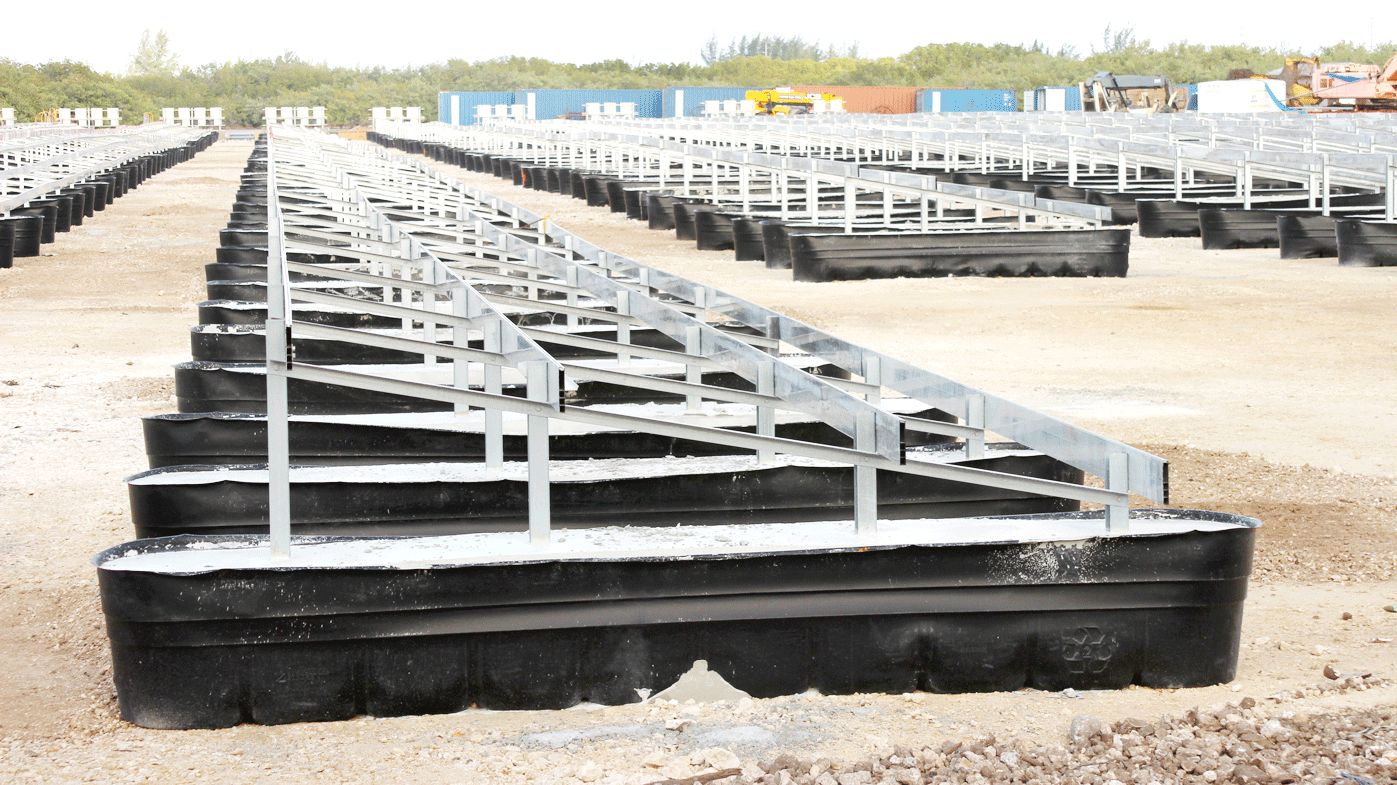
    Another environmentally friendly element of this facility, is that it is sited on a recovered rock quarry. And interestingly, in order to meet the permitting requirement of 155 mph wind loading, being capable of withstanding a category four hurricane, concrete ballasts were used in conjunction with a lower panel tilt angle of 10 degrees (instead of 18 degrees). 

    Still seen as the launching pad for the Cayman Islands National Energy Policy (NEP) goals to have 70% of total electricity power generated from renewable energy by 2037, the facility was bought over by BMR Energy, a Virgin Group company , in January of this year with the broader objective of expanding their Cayman operations in the future.

  • REdiscover: SKELEC’s First Solar PV Farm (St. Kitts)

    REdiscover: SKELEC’s First Solar PV Farm (St. Kitts)

    The St. Kitts Electricity Company (SKELEC), the sole electric power company on the beautiful island of St. Kitts, owns and operates the twin islands’ second largest solar photovoltaic (PV) farm. The plant, rated at approximate 0.5 megawatts (MW), is located on roughly 100m by 183m of land on the outskirts of the capital city, Basseterre , on the mainland Island of St. Kitts.

    The project, which was jointly funded by SKELEC and the Government of the Republic of China (Taiwan) at a cost of approximately US$1.55 million, was constructed by Taiwanese firm SpeedTech Energy and commissioned into service on September 8, 2015.

    It comprises of 1,976, 250 W mono-crystalline solar panels and 48 dummies panels which displays the phrase “GO GREEN”. The panels feed into seventeen 30.7 KVA, 3-phase ABB inverters. The output of the inverters is stepped up to 11 KV by a 600 KVA transformer, which is connected to the grid via the Frigate Bay Feeder.

    Since commissioning, the plant has supplied over 2000 MWh of energy to the grid and avoided the emission of more than 4,000 metric tons of carbon dioxide.  This energy production, however, accounts for less than one tenth of one percent of the energy produced by other sources of power generation on the Island, according to SKELEC.

    The solar farm can be monitored over the internet and SKELEC’s website provides live statistics such as power output, energy output since commissioning, irradiance, ambient temperature, wind speed and direction, and environmental data. Click here to view live data

  • Barbados’ First Utility-Scale Solar PV Farm

    Barbados’ First Utility-Scale Solar PV Farm

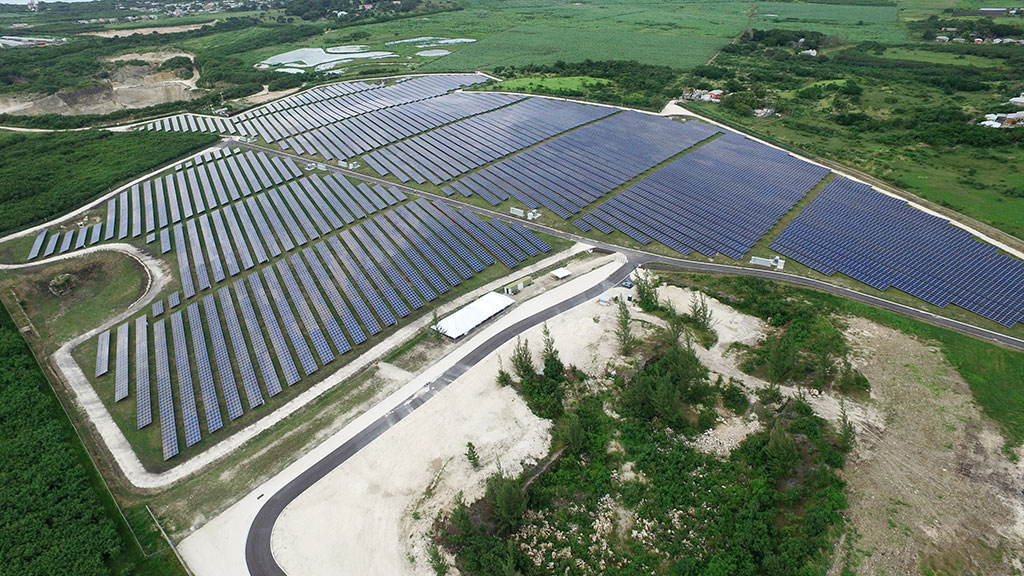
    The Barbados Light & Power (PL&P) 10 MW solar PV farm in Trents, St. Lucy is the Island’s first utility-scale solar project.

    In 2014, the light and power company invited proposals for a solar photovoltaic system of up to 8 megawatts (MW) on an engineering, procurement and construction turnkey basis, for which over 40 bids were received. However, the proposal by the Spanish firm, Grupotec, to construct a 10 MW (AC) solar on the over 40 acres of land identified by BL&P was selected as the preferred bid.

    The project, which consists of approximately 44,500 solar panels, broke ground in January 2016, having signed the EPC contract in late 2015. The plant was officially put into commercial operation in August of 2016, following 8 months of construction and commissioning activities. Also as part of the project, a new substation was also constructed onsite to interconnect the solar facility to the national grid. The project cost a total of approximately US $20 million.

    trent solar barbados.png

    The facility has been in service now for more than two years and it has been reported to be performing as expected. It has been estimated to be delivering fuel savings of approximately  US $4.5 million per year.

    Since its completion, BL&P announced plans for another solar farm at Lower Estate in St George and is working to make the 10 MW wind farm at Lamberts in St. Lucy a reality, so as to increase its portfolio of utility-scale renewable energy generation.

    In addition, the light and power company has a renewable energy rider (RER) program that facilitates the integration of distributed solar and wind energy sources, of sizes up to 500 kilowatts (kW). The program to date has amassed a total of over 12 MW of renewable energy capacity, since first piloted in 2010.

    Furthermore, the Government of Barbados is endeavouring to supply 100% of the island’s electricity needs from renewable energy sources by 2030. This forms the basis for the recent enactment of a new Electricity Light and Power Act, in 2013. The new Act opened up the electricity generation market to independent power producers (IPPs), who can now develop utility-scale renewable energy projects and supply energy to BL&P. The act allows for up 20 MW solar and 15 MW of wind to be added by IPP’s.

    So while the 10 MW solar farm in Trent, St. Lucy marks the Country’s first utility-scale project, the stage is now set for a lot more to follow.

  • Weighing in on T&T’s 10% RE Target

    Weighing in on T&T’s 10% RE Target

    Trinidad and Tobago (T&T), has set an ambitious renewable energy (RE) target of 10% of installed capacity by 2021. This equates to approximately 200 MW given the combined installed capacity of the two islands is over 2000 MW of natural gas based power generation.

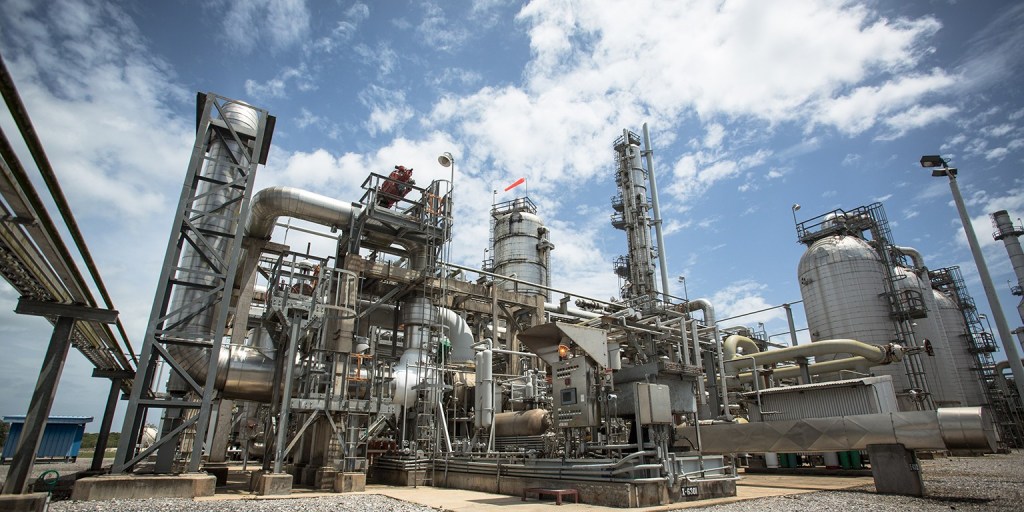
    T&T is the only nation in the western hemisphere, and the second in the world, that generates 100% of its electricity needs from natural gas. Therefore, unlike the other islands in the Caribbean T&T is already energy independent, since all the natural gas used is sourced locally through its sophisticated network of pipelines. As a consequence, T&T have seen the lowest and most stable electricity rates in the region over the last decade.

    Given that T&T is  already energy independent, the integration of renewables will have the effect of reducing the natural gas demand for electricity production and thereby increasing the levels available for export and/or for use in the well developed local petrochemical industry. This is now being championed by the energy sector as a means to increasing government revenues in a time when the nation is witnessing a significant decline in revenues and consecutive budget deficits.

    We decided to weigh in on the potential savings to be derived from this level of renewable energy integration. In order to do this we first had to assume a mix of renewable energy technologies. Since the objective is to use renewables as a means to reduce the consumption of a natural gas and thus increase government revenues, it thus implies that the 200 MW will come from utility scale renewable energy projects only.

    We therefore opted to break up the 200 MW into 120 MW of onshore wind, 60 MW of solar pv and 20 MW of waste to energy. No consideration is given to the technical feasibility of this RE mix. There are, however, ongoing discussions on the subject of undertaking solar and wind resource assessments and there are currently no known technical barrier limiting grid connection.

    As the based case, we looked at Jamaica, which has over 150 MW of utility scaled renewables connected to the grid, to formulate a case for wind and solar in T&T. In 2016, Jamaica commissioned 60 MW of wind and 20 MW of solar capacity at a cost of approximately US $200 million.

    If we use the 36 MW BMR Wind Farm in Jamaica, commissioned in 2016 at a cost of US $90 million, as an example then, 120 MW of utility scale onshore wind capacity should not cost T&T more than US $300 million in 2018, given that the capital cost of onshore wind fell by 20% between 2010 and 2017. Conservatively, 120 MW of wind can generate 285,000 MWh annually, thus avoiding the use approximately 2,850,000 MMBTU of natural gas annually for the production of electricity.

    Similarly, if we use the 20 MW Content Solar Farm in Jamaica, also commissioned in 2016 at a cost of US $63 million, then 60 MW of utility scale Solar PV should not cost T&T more than US $190 million in 2018, since the capital cost of solar PV fell by 68% between 2010 and 2017. 60 MW of solar can conservatively generate 95,000 MWh annually, thus avoiding the use of approximately 950,000 MMBTU of natural gas annually.

    There has been some discussion around the potential of a waste to energy (WtE) facility at the country’s largest landfill, located on the outskirts of the capital city. The Solid Waste Management Company (SWMCOL) estimates that the landfill receives approximately 1000 tonnes of uncharacterized waste daily. We estimate that a 20 MW WtE facility can be developed at the proposed site to produce energy for the national grid.

    Using the information on the Solid Waste Authority of Palm Beach County Renewable Energy Facility 2 (REF2), a 100 MW mass burn WtE facility commissioned in 2015 at a cost of US $672 million, we assume, therefore, that a similar facility rated at 20 MW should not cost T&T more than US $150 million. Given that a mass burn WtE facility is a steam power plant at its core, then a 20 MW plant should generate approximately 150,000 MWh annually and thus avoiding the use of approximately 1,500,000 MMBTU  of natural gas annually.

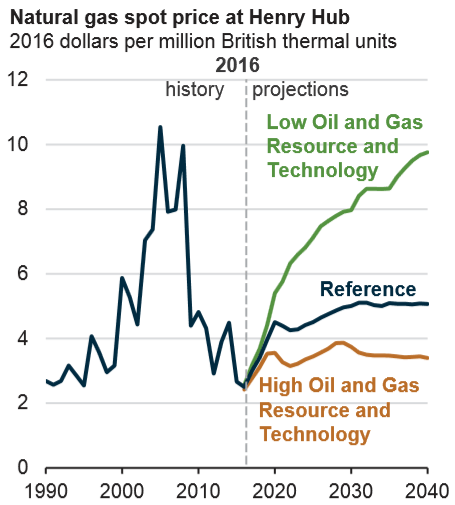
    natural gas price projections

    Therefore, from our selected portfolio of renewables we see that the potential exist to avoid approximately 5,300,000 MMBTU of natural gas annually. However, this does not come cheap as total investment cost estimates to US $640 million. The chart to the left shows the projected price of natural gas up to 2040.

    If we therefore look at the pessimistic case, we see that the price of natural gas in the US is projected to vary between US $3.00 to $4.00 over the remaining period and averages about US $3.50. Using this price we estimate a potential earning of US $18.6 million annually. The optimistic outlook, on the other hand, shows an average price of approximately US $6.80 resulting in a potential earning of US $36 million per annum.

    Both the pessimistic and the optimistic outlooks gave very large negative net present values using a 10% discount rate over a 20 year period. The optimistic case only gave a positive net present value for a discount rate of about 1%.  The analysis assumes that the projects would be government owned and did not take into consideration the operation and maintenance cost over the life of the project. Overall, it shows that the projected revenues to be derived from the sale of the avoided natural gas on the open market will not return the capital invested over a 20 year horizon.

  • Jamaica’s RE Near Term Outlook

    Jamaica’s RE Near Term Outlook

    The Jamaican electricity sector has seen its fair share of investment in renewable energy over the last two decades or so, to the tune of approximately US$360 million to be exact.

    Development to date:

    Jamaica has a long history of using its indigenous renewable sources of energy to generate electricity. This dates back as far as 1955 when the Upper White River hydroelectric power plant was inaugurated. The recent thrust to incorporate other forms of indigenous renewable sources of energy into the country’s energy mix started with the installation of a 225 kW wind turbine in 1996 at the Munro College campus, in St. Elizabeth, some fifty years later.

    The success of the Munro installation led to the development of the country’s first commercial wind farm in 2004, the 20.7 MW Wigton I plant located in the neighbouring parish of Manchester. The plant had its fair share of issues, ranging from technical to financial, but the experience gained led to an 18 MW expansion in 2010, dubbed as Wigton II. In 2010 the utility company, the Jamaica Public Service (JPS) Company, also completed its first wind farm, a 3 MW plant located in close proximity to the Munro campus.

    The publishing of the country’s national energy policy in 2009 and it’s draft renewable energy policy in 2010 prompted the development of several renewable energy projects. The first was a 7.2 MW expansion of JPS’s Maggotty hydroelectric plant in 2014. Then in 2016, the country witnessed the largest commissioning of renewable energy plants in a single year, closing out the year with a whopping total of 80 MW. This consisted of the 24 MW expansion of the Wigton Wind Farm (Wigton III), the 36 MW privately owned Wind Farm in St. Elizabeth, and the 20 MW Solar Farm in Clarendon, also privately owned.

    A near term outlook:

    The next renewable energy project on the horizon is the 33.1 MW Eight Rivers Solar Farm in Paradise Park, Westmoreland. In 2015, this project was selected by the Office of Utilities Regulation (OUR) from a list of 19 bids, received in response to a request for proposal (RFP) for renewable energy with capacity up to 37 MW. The privately-owned solar farm broke ground last month and is expected to be completed by December 2018 at an estimated cost of US$48.7 million dollars.

    Once completed this solar farm will be the second, but largest, solar installation on the island and it will feed electricity into the JPS grid at US$0.0854 per kWh. At this feed in rate, which is less than half that of the other solar farm on the island, this project has proven that renewable energy projects can rival conventional generation and it sets a new price ceiling for future renewable energy projects in Jamaica.

    Though the potential for wind energy on the island has not yet been exhausted, the Petroleum Corporation of Jamaica (PCJ), the parent company of Wigton Windfarms Ltd, is seeking to quantify the country’s offshore wind potential. The PCJ applied for and was awarded, in October of last year, a grant from the United States Trade and Development Agency (USTDA) to undertake a feasibility study of the island’s offshore wind potential. Preliminary work should have started during the final quarter of 2017 and the study is scheduled to last for 12 months. Should it proves feasible and leads to the development of viable offshore wind farms; it will be another first for Jamaica and the wider Caribbean.

    Grid storage is also on the horizon if JPS is successful in obtaining the necessary approvals from the OUR. In May of last year, JPS sent out an RFP for the supply and installation of a 13 or 24.5 MW hybrid energy storage system. According to the light and power company, this system is required to smooth the effect of the intermittent renewable energy sources presently on the grid and also to provide other essential grid services such as frequency support, voltage support, and spinning reserve.

    Dubbed as a first of its kind in the Caribbean, this energy storage system will utilize a combination of high-speed and low-speed flywheels and containerized lithium-ion batteries and is to be located at the Hunts Bay Power Plant substation. Once approved by the regulator, it is expected to be completed by the third quarter of 2018 at an estimated cost of US$21 million.

    The Government is currently putting together an Integrated Resource Plan (IRP) with the intent to guide the development of a modern energy sector in Jamaica. The IRP is expected to establish the projected electricity demand over the next 20 year period, determine the generation capacity and technologies to be used to satisfy this demand, and to establish agreements on the transmission and distribution infrastructure to generate and deliver the needed electricity and the resulting tariffs.

    The IRP, which was originally slated for completion late last year, when completed will give all stakeholders, including the investment community, a clear view of the agreed suite of medium to long term investment opportunities necessary to achieve the island’s 2030 renewable energy target of 30%.

  • Jamaica’s First Utility-Scale Solar PV Farm

    Jamaica’s First Utility-Scale Solar PV Farm

    In 2013, WBR Enterprises Inc. was selected by the Office of Utilities Regulation (OUR) via a competitive bidding process to develop a 20 Megawatts (MW) solar farm – the island’s first utility-scale solar project. The project was the third lowest bid received, in response to the OUR’s request to supply 115 MW of renewable generation, with a proposed price of US$0.1880 per kilowatt-hour (kWh) to deliver renewable energy to the national grid.

    dsc_0960-300x1241 On September 18, 2014, WBR subsidiary, Content Solar Ltd., signed a 20-year power purchase agreement (PPA) with the Jamaica Public Service Company (JPS) to sell the full output of its solar farm to the grid.
    The 154 acres solar farm, coined Solar Content, subsequently broke ground in Content Village, York Town, Clarendon on July 9, 2015. The $63 million (US) project was financed in part by a $47 million debt agreement with the Overseas Private Investment Corporation (OPIC) and the U.S. Government’s Development Finance Institution for the development. Sponsor equity was provided by WRB Serra, a strategic partner of WRB Enterprises and WRB Energy focused on sustainable infrastructure investments in the Caribbean and Latin America.  The Content Solar plant is the second OPIC-financed project in support of the U.S. Caribbean Energy Security Initiative.image0031

    It is worthy of noting here that, the Content Solar plant is the second OPIC-financed project in support of the U.S. Caribbean Energy Security Initiative. The first being the blue mountain renewable (BMR) 36MW Wind Farm also located in Jamaica.

    And in a historic move on August 28, 2016, the Content Solar farm was launched into commercial operations as Jamaica’s first utility-scale solar PV plant.  The plant which boasts 97,000 solar panels will power more than 20,000 households over the next 20 years under the PPA with JPS.

    According to the Jamaica’s National Energy Policy 2009-2030, the country is looking to significantly increase investments in renewable energy technologies. The country has targeted at least 20% contribution towards the energy mix from renewable energy sources by 2030. The content solar farm pushes Jamaica’s installed renewable capacity to approximately 152 MW or 14.8%.

    Jamaica second utility-scale solar project, the Eight Rivers 33 MW solar farm, is currently ongoing and is estimated to be put into commercial operation by the end of 2018. The commissioning of Eight Rivers project will see jamaica’s renewable energy mix at 17.5%. The planned 190 MW LNG power plant in Old Harbour Bay, St Catherine, which is expected to be completed in early 2019, will change this mix.

    These are certainly exciting times in Jamaica’s electricity market environment as they seek to lower the cost of electric energy in a bid to improve the country’s socio-economic conditions.

  • Marketing Renewable Energy Consultancy in Trinidad & Tobago

    Marketing Renewable Energy Consultancy in Trinidad & Tobago

    Renewable Energy (RE) is once again at the forefront both locally and internationally with the recent display of two opposing views, one by the Prime Minster of Trinidad & Tobago (T&T) versus another by the President of the United States of America (USA).

    The T&T Prime Minister, following his return from RE and Energy Efficiency (EE) conscious Chile, reaffirms his country’s commitment to the tenants of the 2015 Paris Climate Agreement, with specific objectives to be achieved via the reduction of the utilization of fossil fuels and the promotion of RE and EE. The American President, on the other hand, following his return from the recently concluded 2017 NATO summit in Belgium,  unexpectedly announced his country’s withdrawal from the same agreement.

    With these political decisions fresh in our minds, it is worth noting that the success of any RE & EE related product or service introduced into a market is not only based on the political environment but also on the effectiveness of the marketing plan designed for its promotion.

    The T&T RE Market in the past has been virtually non-existent with the present grid-connected RE sources accounting for less than 1% of all grid-connected generation. However, the prospects of the future RE market appear to be more favourable with the Government’s target of 10% Penetration of RE of the total forecasted Electricity Grid Capacity by 2021, specifically from Wind, Solar and Waste to Energy (WtE) technologies. It is expected that the Government will continue to take the lead in the local RE Market, with the implementation of fiscal incentives and amends the relevant legislations to allow for grid connection.

    It is expected that the Government will continue to take the lead in the local RE Market, with the implementation of fiscal incentives and amendments to the relevant legislations for grid connection. However, there will still be room for the introduction of private sector investment in distributed renewable generation sources (DRGS), such as domestic Solar Photovoltaic and Wind Turbine generators as a further means to increase T&T’s energy security and reduce our reliance on fossil fuels.

    Although there is now a more optimistic outlook of the T&T RE Market, further considerations must be made to the fact that (i) the market is still in its Infant Stage and (ii) the cost of fossil based energy in T&T is relatively cheap at less than US$0.06/kWh for Residential Customers and even cheaper energy charges for Industrial Customers with an additional Demand (kVA) Charge. These low rates would result in DRGS having payback periods in excess of 9 years, which renders them less attractive. Thus, a more paternalistic approach to managing the introduction of DRGSs to T&T via the provision of consultancy as a service to all segments of the market for more optimally engineered solutions is required. This RE Consultancy Service must be marketed as a convenience to the customer where it is the consultant who would determine the optimal engineering design and specification solution to the DRGS application that is desired by the customer.

    The effective marketing of RE Consultancy Services as a convenience for the customer is one of the pillars of roll out of DRGSs in T&T as it is essential for the removal of some of the existing barriers to entry the T&T RE Market. Even with the existing barriers to entry to the RE Consultancy Service T&T Market there are still a few RE Product Distributors that act as RE Consultants such as Smart Energy Ltd. and Solar Power Concepts Ltd. Thus the existing competitive landscape for RE Consultant Services is weak as there are just a few players who predominantly focus on Solar Technologies only. While the positioning of RE Consultancy Services should be one where the customer views engaging with a consultant before the initiating of any type RE Project solution being essential to its success.

    In that same vein, the success of the RE Consultancy Service Company is based on the marketing plan effectively defining the market segments. Failure to effectively segment the T&T RE Market for opportunities would result in:

    • Marketing to customers who are less willing to pay the premium for RE Consultancy;
    • Providing only a limited range of initiatives to appeal to customers; and
    • Using unfocused marketing techniques

    In addition to the typical criteria used to segment the market such as demographic, geographic, physiographic and product benefit criteria, the criteria should initially start with the RE type desired by the customer, followed by the maximum aggregate capacity of the DGRS into segments similar to the existing T&TEC Tariff Structure, for example:

    • Up to 5kW, for single phase, 3-wire, 115/230volt DGRS installations serviced under the Domestic and General Tariff (Rate A),
    • Up to 50kW, for single and three phase, 4-wire, 115/230volt DGRS installations serviced under the Commercial Tariff (Rate B),
    • 50kW to 200kW, for three phase, 4-wire 115/230volt DGRS installations serviced under the Industrial Tariff (Rate D1), and
    • Single DRGS with output greater than 200kW shall be installed for self-generation as stand-alone equipment which does not export to the Grid.

    In the end, the effective marketing of RE Consultancy Services according to the specific market segments would help to mold the perception and attitude towards DGRSs and assist achieving nationwide adoption of RE.


  • St. Kitts’ First Utility-Scale Solar PV Farm

    St. Kitts’ First Utility-Scale Solar PV Farm

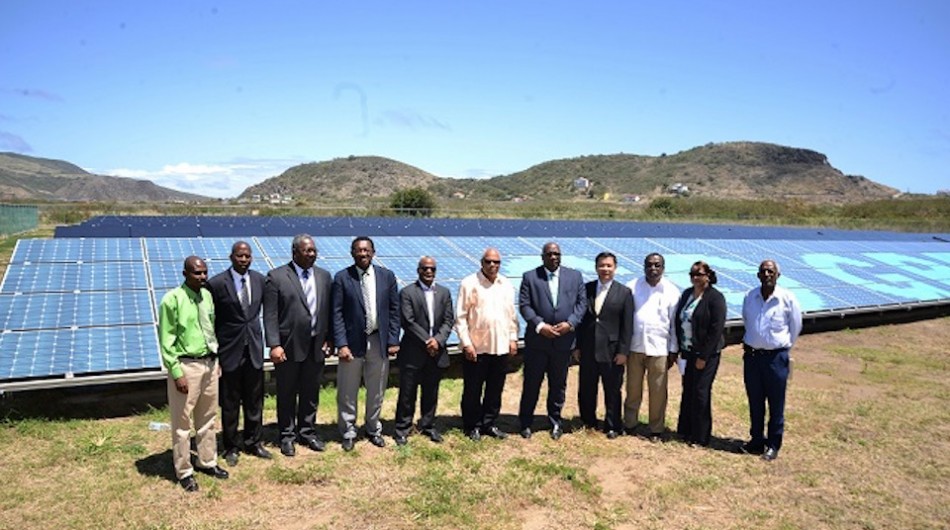
    The St Christopher Air, Sea and Ports Authority (SCASPA) solar farm is a 1.0 megawatt (MW) farm on the beautiful Island of St.Kitts. This farm, which is located just north of the runway at the Robert L. Bradshaw International Airport, consist of approximately 3,500 photovoltaic panels that generates more than ample electricity for SCASPA operations, with excess energy fed into the island’s public electrical grid.

    The SCASPA solar farm is a joint venture of the governments of St Kitts and Nevis and Repubic of China (Taiwan), SCASPA, the Sugar Industry Diversification Fund (SIDF), and the St Kitts Electricity Corporation (SKELEC). The US $2.5 million farm was commissioned in late 2013 at which time was estimated to save SCASPA more than EC$1 million in electricity costs annually and if such pays for itself by 2018.

    unknownSolar-farm[1]

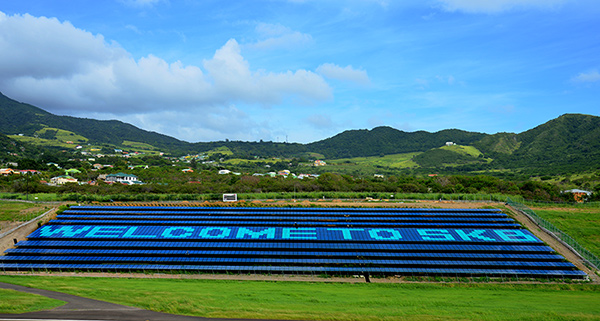
    Built by Taiwanese technology company Speedtech, the solar panels are mounted near ground level at an angle that makes them better able to withstand extreme wind and rain conditions, and their reinforced concrete base is designed to withstand approximately 3,000 pounds of pressure per square inch.  In addition, since the panels are visible to the air, they display the message “Welcome to SKB.” SKB is the booking (sabre) code for the Robert L. Bradshaw International Airport.