Tag: Energy

  • XenogyRE’s humble beginnings

    XenogyRE’s humble beginnings

    The motivation to start XenogyRE really originated out of my love for and interest in energy – clean, renewable and sustainable energy – and thus the name.

    My primary interest in energy sprung from my love of physics and by extension electronics and electrical, all of which I was exposed to at Holmwood Technical High School located in the cool hills of Christiana, Manchester (congratulations to the girls for reclaiming their title as the 2013 ISSA GraceKennedy Girls Champs).

    Growing up I was never the avid reader (or writer) of any form of social commentary. Throughout secondary school and the three years I spent pursuing an undergraduate degree in electrical and computer engineering at the University of the West Indies, I was always more interested in crunching numbers and read and wrote only as required by the courses I undertook.

    I think I have come a long way since writing my first article titled “solar basics” which I recently added to my collection of articles here on wordpress.com. Xenogy started out as a page on Facebook using the website’s note feature to tailor articles to, then, a small number of followers. I lost some content as a result of Facebook’s abrupt decision to block a plugin app that I was using to facilitate my content formatting, so I decided to move to weebly.com, where I had more control. I, however, opted soon after to migrate to wordpress.com as the burden of formatting and content management was taking away from the writing.

    Having edified myself up to the post graduate level, I am now at a junction where I desperately desire to share my acquired knowledge and interest in energy. This urge is tightly coupled with my love for the environment, my country (yeah man) and my progeny (she’s a bundle of joy), which have pushed me to the point that I spend long hours researching and writing articles on subjects ranging from solar photovoltaic to shale gas – when I should be sleeping (I glanced at the time (1:39 am) and sighed!).

    There is no doubt that Jamaica is in a very sticky position. Why? Because, energy is the force driving and sustaining all activities in our society and we are suffering from an energy crisis. Our current economic state is closely tied to our antiquated energy systems and until we (the people and the government) get serious and address the energy problem then we will never live to see the back of the IMF and the fiscal cliff will be towering above our heads.

    I do feel that we the people are the key to saving our nation. As a result, I have decided to zoom in on solar, wind and hydroelectric systems for the rest of the year (2013). I am doing this because I am convinced that solar, wind and hydroelectric (a mature technology) are the solutions we so desire in the land of sunshine, wind, and water (I am changing the phase from “land of wood and water”).

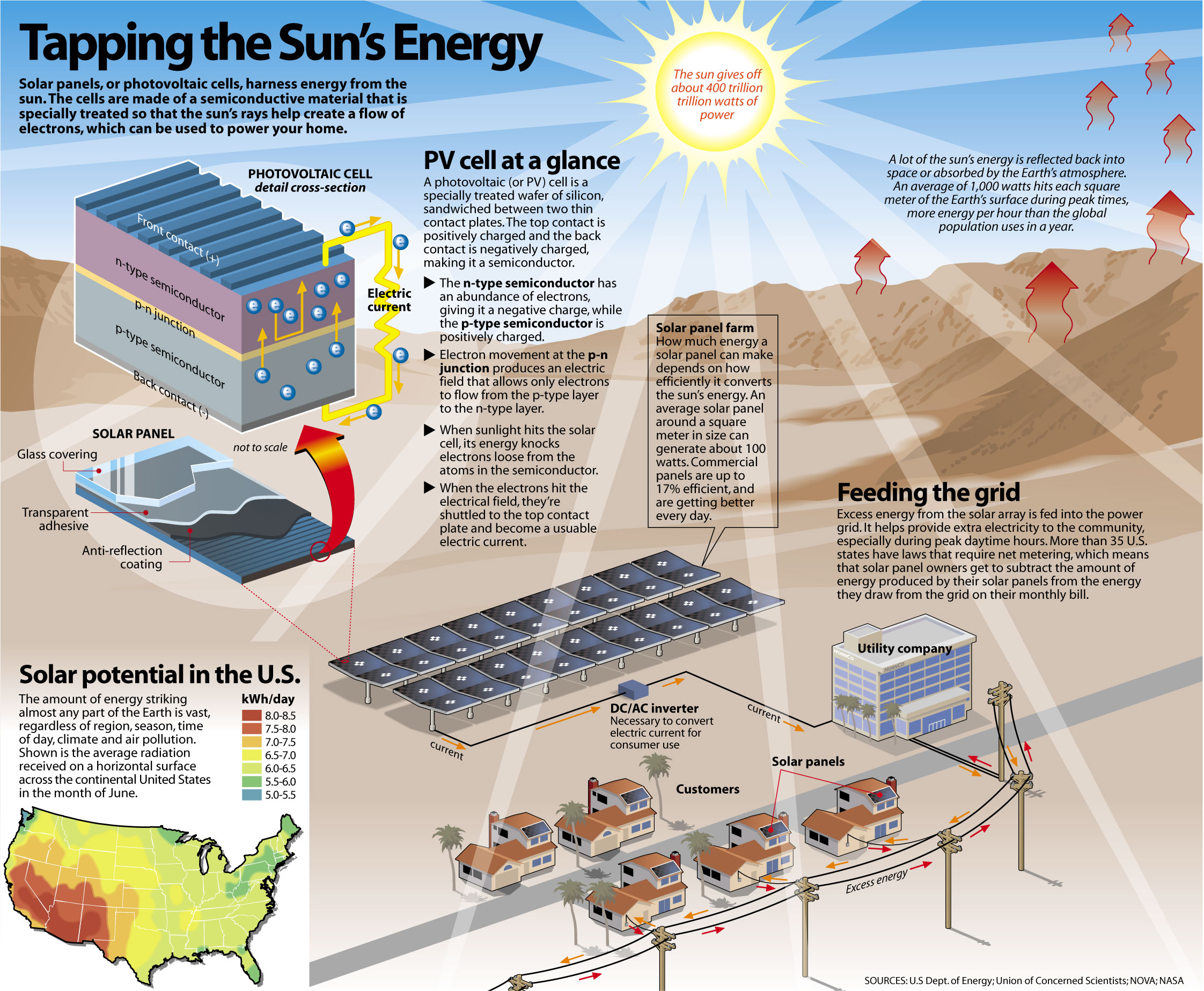
    I started out writing this post with the intention of sharing with you a simple infographic on solar pv systems, however the idea shifted and the title of the article changed, but I refuse to deprive you of the information so I decided to attach the infographic below (all credit goes to www.solarenergy.net). Edify yourself and feel free to leave a comment!
    SolarEnergySystemsFull

  • Jamaica’s Hydroelectric Potential

    Jamaica’s Hydroelectric Potential

    Jamaica, the paradise island that is sometimes referred to as  “the land of wood and water,” has great hydroelectric potential due primarily to its many rivers, land topography and climate. Out of a list of 120 rivers, the Island has several rivers that are suitable for hydroelectric power generation.

    run-of-river hydroelectric plan
    run-of-river hydroelectric plan

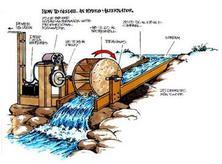
    Hydroelectric power is power generated from water. A basic hydroelectric power plant generates electricity in a three-stage process: First, water wheels are used to capture the kinetic energy (energy of motion) from falling or running water. Next, this kinetic energy is converted into mechanical energy by a gear mechanism attached to the water wheel. Then finally, the mechanical energy is converted into electrical energy by an alternator that is connected to the gear mechanism.

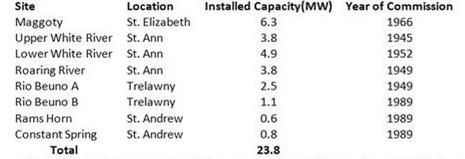
    For over 100 years Jamaica has been exploiting its hydroelectric potential through the use of “run-of-river” hydroelectric power plants. There are currently eight (8) such plants in operation across the island today:

    These plants are owned and maintained by Jamaica Public Service Company (JPSCo.). Together they produce approximately 5% baseload capacity for the public electricity grid during the rainy seasons. Most of these systems are fairly old, however, with the youngest ones being more than 15 years old. These eight hydroelectric power stations save the country roughly US$27M on fuel imports annually. The following chart shows historical data of hydroelectric power generation in Jamaica:

    In April 2011, the JPSCo unveiled plans to undertake the first major hydroelectric development in Jamaica in 30 years. This involves the commissioning of a new plant that will further reduce the country’s oil import by 48,000 barrels of fuel per year. At an estimated price of $100 per barrel, this would save Jamaica US$4.8M annually. The new plant, which will see the doubling of the capacity at the Magotty Hydroelectric Plant, is scheduled for completion by July 2013.

    The Petroleum Corporation of Jamaica (PCJ) has shown through studies that Jamaica’s hydroelectric potential could be further exploited through the construction of a number of small-scale plants. The total technical potential is estimated to be in the range of more than 56 MW, including one large-scale facility at Back Rio Grande, as shown below.
    While the technical feasibility was proven in most cases, the economic assessment resulted in negative decisions in the past due to the high investment costs involved and comparatively low electricity generation costs from conventional plants. However, with the hike in oil prices (currently at US$99.87 per barrel) resulting in an increase in electricity generation costs, this picture is changing as can be seen from JPS’s recent decision to expand the capacity of the Maggoty Plant.

    Currently, the PCJ’s Centre of Excellence for Renewable Energy (CERE) division that has been mandated to support the implementation of new ideas and methods in renewable energy in Jamaica is pursuing several hydroelectric initiatives. The CERE has partnered with two international companies to update the technical, financial and economic feasibility study on five potential hydroelectric projects (listed below). CERE has partnered with BPR’s Power Division in four of the five projects and IT Power Ltd. in the other. BPR is a private engineering consulting firm located in Quebec, Canada, and IT Power Ltd. is a climate change consulting firm located in the United Kingdom.

    1. The Back Rio Grande Hydropower Plant: Back Rio Grande is located in the parish of Portland at the north eastern end of the island.

    Project Highlights – Back Rio Grande Potentials:

    • 6 MW of electricity potential
    • 17,120 MWh of electricity per year
    • 10,000 barrels of avoided oil imports
    • 14,000 tonnes of CO2 emission reductions
    • Foreign Direct Investment US$20.7 million

    2. The Great River Hydropower plant: Great River borders the parishes of St. James and Hanover, on the north western coast of the island.

    Project Highlights – Great River Potentials:

    • 8 MW of electricity potential
    • 35,218 MWh of electricity per year
    • 21,000 barrels of avoided oil imports
    • 29,000 tonnes of CO2 emission reductions
    • Foreign Direct Investment US$23.6 million

    3. The Laughlands Hydropower Plant: Laughlands Great River, a Greenfield site, is located in the parish of St. Ann, on the north coast of the island.

    Project Highlights – Laughland Potentials:

    • 2 MW of electricity potential
    • 13,920 MWh of electricity per year
    • 8,000 barrels of avoided oil imports
    • 12,000 tonnes of CO2 emission reductions
    • Foreign Direct Investment US$6.7 million

    4. The Rio Grande (1 & 2) Hydropower Plants: Rio Grande is located in the parish of Portland at the north eastern end of the island.

    Project Highlights – Rio Grande Potentials

    • 2 MW of electricity potential
    • 8,425 MWh of electricity per year
    • 5,000 barrels of avoided oil imports
    • 7,000 tonnes of CO2 emission reductions
    • Foreign Direct Investment US$6.8 million

    5. The Swift River Hydropower Plant: Swift River is a tributary of the Rio Grande, located in the parish of Portland at the north eastern end of the island.

    Project Highlights – Swift River Potentials

    • 2 MW of electricity potential
    • 8,390 MWh of electricity per year
    • 4,900 barrels of avoided oil imports
    • 6,900 tonnes of CO2 emission reductions
    • Foreign Direct Investment US$6.5 million

    These feasibility studies now open up the door for members of the private sector to step in and play a bigger role in leading the way forward towards the uses of cleaner, and cheaper sources of electricity. Private investors should, however, be aware that current legislation requires a license for all types of water uses, issued by the Water Resources Authority. The license is granted for a period of 5 years but can be extended thereafter. In competing situations, preference is given to fresh-water use over any energetic purposes. All environmental aspects have to be approved by the National Environment Protection Agency (NEPA).