
In one of my previous article – titled Solar Basics – I discussed briefly the enormity of the energy received from the sun globally. Jamaica receives approximately 5kWh/m2 of solar radiation per day or 1800 kWh/m2 annually (more…)
Category: Renewable Energy
-

Make ‘Electricity’ while the Sun Shines
In a recent post, titled solar basis, I gave a quick overview on solar energy and its conversion into other, more useful, forms of energy (e.g. electricity). In this article however, I will delve a little into solar electric systems. But before I jump into it, I will briefly recap from that article what I think might be relevant here for those of you who did not read it as yet.

Solar Thermal (left) and Solar Electric (right) (www.blog.thesietch.org) As outlined in the article, solar energy systems fall into two main categories: 1) solar thermal systems, which uses the thermal energy from the sun to heat a working fluid that in-turn can be used for heating and cooling in buildings (e.g. solar hot water heaters) or for electricity generation (e.g CSP’s) and 2) solar electric systems, which uses the concept of photoelectric to convert the light (irradiation) from the sun directly into electricity (e.g. photovoltaic cells). The later is of interest here and thus from here on out will be referred to as solar photovoltaic (PV) systems.
The main components of a solar PV system is the PV Cells, which are grouped together to form a single PV Module. In solar installations several of these PV modules are typically connected (in series) to form an Array, as show in the diagram that follows.
The PV cells themselves are semiconductor electronic devices that convert the sunlight directly into electricity and thus forms the heart of a solar PV power generation system. The modern form of the PV cell was invented in 1954 at Bell Telephone Laboratories.
Currently, solar PV systems are one of the most “democratic” renewable technologies available. This is as a result of their modular size, which puts them within the reach of individuals and small-businesses who want to access their own power generation and lock-in electricity prices.
Solar PV technology offers a number of significant benefits, including:
- Solar power is a renewable resource that is available everywhere in the world.
- Solar PV technologies are small and highly modular and can be used virtually anywhere, unlike many other electricity generation technologies.
- Unlike conventional power plants using coal, nuclear, oil and gas; solar PV has no fuel costs and relatively low operation and maintenance (O&M) costs. PV can therefore offer a price hedge against volatile fossil fuel prices.
- PV, although variable, has a high coincidence with peak electricity demand driven by cooling in summer and year round in hot countries.
A wide range of PV cell technology is now available on the market, using different types of materials. PV cell technologies are usually classified into three generations, depending on the basic material used and the level of commercial maturity:
- First-generation PV modules (fully commercial) uses a wafer-based crystalline silicon (c-Si) technology, either single crystalline (sc-Si) or multi-crystalline (mc-Si).
- Second-generation PV systems (early market deployment) are based on thin-film PV technologies and generally include three main families: 1) amorphous silicon (a-Si) and micromorph silicon (a-Si/μc-Si); 2) Cadmium-Telluride (CdTe); and 3) Copper-Indium-Selenide (CIS) and Copper-Indium-Gallium-Diselenide (CIGS).
- Third-generation PV systems include technologies, such as concentrating PV (CPV) and organic PV cells that are still under demonstration or have not yet been widely commercialised, as well as novel concepts under development.
On average a PV cells life expectancy is 25 years and the cells are able to harness both direct and diffuse radiation from the sun. The amount of energy harnessed depends on the type of semiconductor material used in the solar cells, ambient operating temperature, cloud cover, shading, tilt angle and the direction in which the PV modules are installed. As the earth rotates continuously, PV cells which have sun ‘tracking’ capability are able to harness more energy. Jamaica and Barbados is located 18 and 13 degrees north of the equator respectively, thus it is a recommended best practice to install PV modules facing south at an angle of 18 and 13 degrees respectively.
Some simple questions to ask yourself before investing in Solar Energy:
- How readily available is the natural resource – sunshine? How readily can you access it – shading etc?
- Why are you interested in implementing a solar PV system – high cost of electricity or you are environmentally conscious?
- What is the initial cost of implementing a solar PV system in your area – total cost and the cost of the individual components?
- What is the maintenance requirements of your system of choice and estimated cost to maintain it?
- Where can you install your PV system – on the roof or in your yard?
- What is the warranty periods offered on PV modules, and other components of the system?
- What are the impacts on the natural environment? Will it reduce your carbon footprint or contribute to other environmental issues?
The answers to most of the questions are pretty much straight forward. My final line to you is that solar PV is one of the fastest growing renewable energy technologies today and it is expected that it will play a major role in future global electricity generation mix. So embrace your future today, by making steps to start generating your own electricity as the sun shines!
feel free to register your comments below….
-

Solar Water Heating
Solar energy technology continues to advance both in terms of efficiency and cost. The cost, however, is still outside the reach of the average hardworking middle class of our society. The need for alternative (more…)
-

XenogyRE’s humble beginnings
The motivation to start XenogyRE really originated out of my love for and interest in energy – clean, renewable and sustainable energy – and thus the name.
My primary interest in energy sprung from my love of physics and by extension electronics and electrical, all of which I was exposed to at Holmwood Technical High School located in the cool hills of Christiana, Manchester (congratulations to the girls for reclaiming their title as the 2013 ISSA GraceKennedy Girls Champs).
Growing up I was never the avid reader (or writer) of any form of social commentary. Throughout secondary school and the three years I spent pursuing an undergraduate degree in electrical and computer engineering at the University of the West Indies, I was always more interested in crunching numbers and read and wrote only as required by the courses I undertook.
I think I have come a long way since writing my first article titled “solar basics” which I recently added to my collection of articles here on wordpress.com. Xenogy started out as a page on Facebook using the website’s note feature to tailor articles to, then, a small number of followers. I lost some content as a result of Facebook’s abrupt decision to block a plugin app that I was using to facilitate my content formatting, so I decided to move to weebly.com, where I had more control. I, however, opted soon after to migrate to wordpress.com as the burden of formatting and content management was taking away from the writing.
Having edified myself up to the post graduate level, I am now at a junction where I desperately desire to share my acquired knowledge and interest in energy. This urge is tightly coupled with my love for the environment, my country (yeah man) and my progeny (she’s a bundle of joy), which have pushed me to the point that I spend long hours researching and writing articles on subjects ranging from solar photovoltaic to shale gas – when I should be sleeping (I glanced at the time (1:39 am) and sighed!).
There is no doubt that Jamaica is in a very sticky position. Why? Because, energy is the force driving and sustaining all activities in our society and we are suffering from an energy crisis. Our current economic state is closely tied to our antiquated energy systems and until we (the people and the government) get serious and address the energy problem then we will never live to see the back of the IMF and the fiscal cliff will be towering above our heads.
I do feel that we the people are the key to saving our nation. As a result, I have decided to zoom in on solar, wind and hydroelectric systems for the rest of the year (2013). I am doing this because I am convinced that solar, wind and hydroelectric (a mature technology) are the solutions we so desire in the land of sunshine, wind, and water (I am changing the phase from “land of wood and water”).
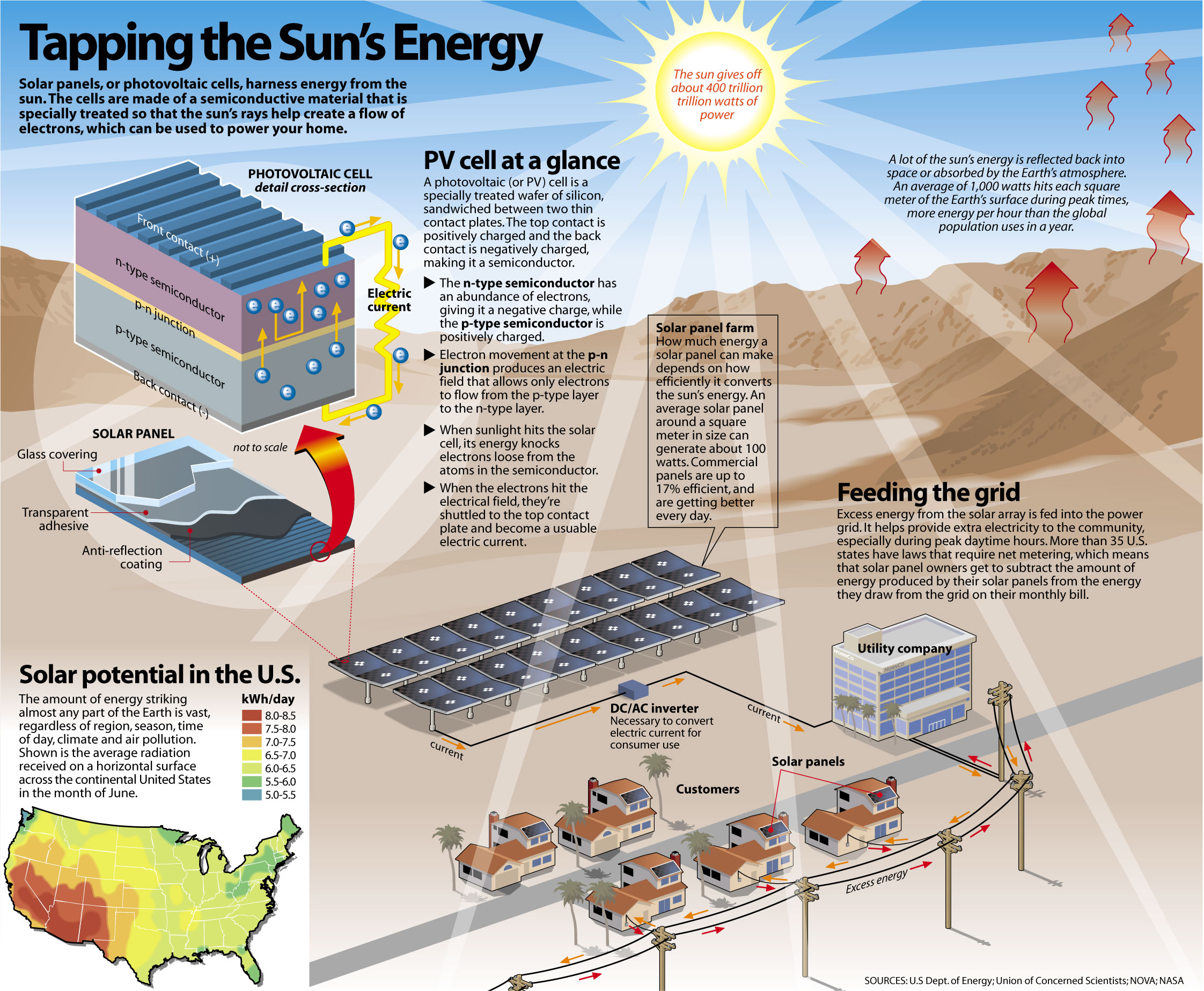
I started out writing this post with the intention of sharing with you a simple infographic on solar pv systems, however the idea shifted and the title of the article changed, but I refuse to deprive you of the information so I decided to attach the infographic below (all credit goes to www.solarenergy.net). Edify yourself and feel free to leave a comment!
-
Solar Power Basics
The introduction of feeding in policies such as Net Metering/Billing into the Caribbean electricity markets is hoped to trigger a significant influx of grid connected solar systems, similar to the response observed in Germany (more…)
-

Cuba gone with the Winds
Cuba, the largest of the beautiful islands of the Caribbean – often referred to as the “Pearl of the Antilles”, recently unveiled plans to embark on a massive wind power development project. The project will see the integration (more…)
-
Jamaica Leads with 41.93 (MW)
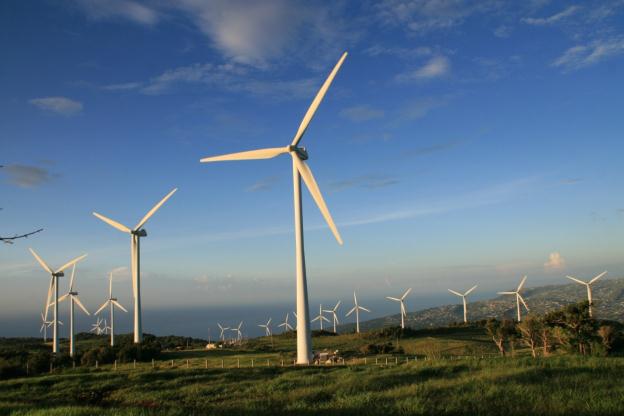
Jamaica currently leads the Caribbean in wind energy integration, boasting an installed capacity of 41.93MW (Megawatts). Its latest addition to the national grid being the Munro Find Farm, completed in September 2010. (more…)
-
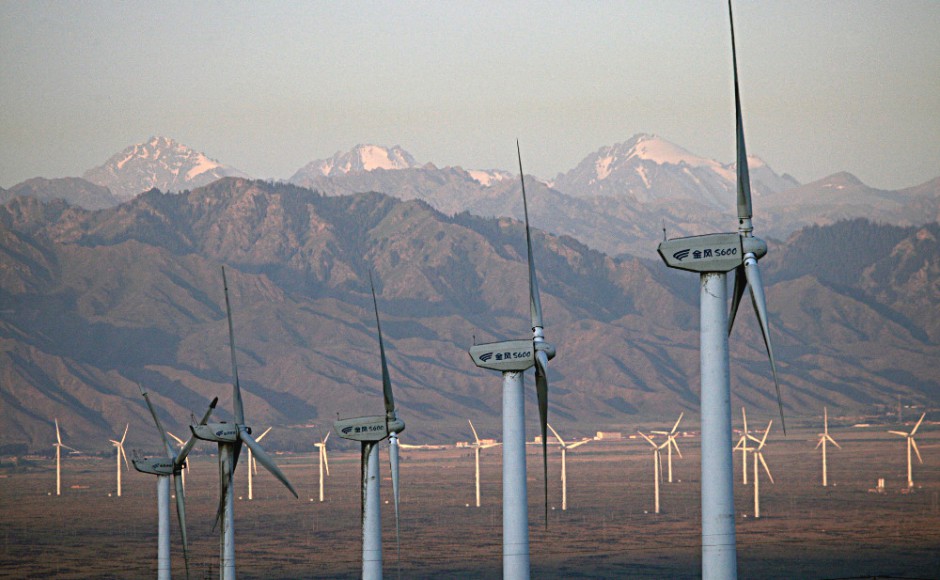
China Leads Growth in Global Wind Power Capacity
Global installed wind power capacity continued to grow in 2011, according to new research conducted by Worldwatch Institute Vital Signs Online service. The data collected showed that global wind power capacity topped out at 238,000 megawatts (MW) after adding just over 41,000 MW. This means that the global capacity grew by 21 percent in 2011, albeit lower than the 2010 rate of 24 percent and markedly lower than the 2009 rate of 31 percent. Nonetheless, the world now has four times as much installed wind power capacity than in 2005 (just seven years ago) reflecting the combined effects of falling prices, improved technology, global investment, and various incentive programs. China led the way with a 43 percent share of global capacity additions in 2011, followed by the United States at 17 percent, India with almost 7 percent, and Germany at 5 percent, writes report author and Climate and Energy Program Manager Mark Konold.
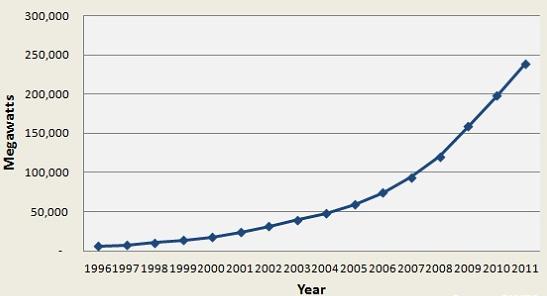
Total World Wind Energy Capacity, 1996-2011 In terms of cumulative capacity, China has a commanding 26 percent of global installed capacity. A total of almost $75 billion was invested in wind energy installations in 2011, which was 22 percent less than invested in 2010. For the second year in a row China set the pace and propped up the industry, increasing its total capacity by 40 percent over 2010 levels. China added just over 17,000 MW of new capacity, bringing its grand total to close to 63,000 MW. There remains an important gap between total installed capacity and actual electricity available for use from wind power, however. Despite having the most installed wind capacity, China still struggles to use all the electricity its turbines generate. read more at www.worldwatch.org
-
Geothermal Potential in the Caribbean
As explained in the post geothermal energy is heat energy originating from beneath the earth’s crust. This heat is continually produced by the natural decay of radioactive materials such as uranium and potassium. According to the US Department of Energy, the amount of heat energy within 10,000 meters of the earth’s surface is 50,000 times more energy than the energy to be derived from all of the oil and natural gas resources in the world.
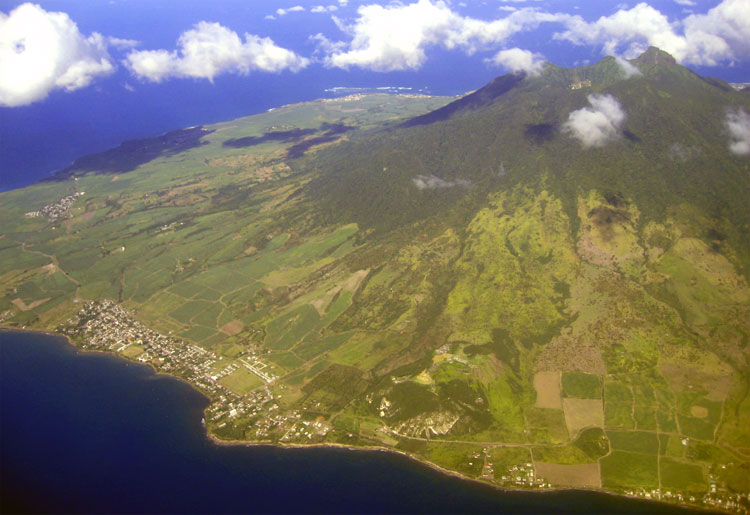
The areas with the highest underground temperatures are in regions with active or geologically young volcanoes. These “hot spots” occur at plate boundaries or at places where the crust is thin enough to let the heat through. The northern island of the Lesser Antilles possesses the potential for geothermal sites. According to Huttrer1999, virtually all the islands are underlain by active or dormant volcanoes. The islands of Saba and Saint Eustatius (Statia) of the Netherlands Antilles, Saint Kitts and Nevis, Montserrat, Dominica, Saint Lucia, Saint Vincent and the Grenadines, and the French territories, Guadeloupe and Martinique form part of the active volcanic arc of the Caribe Oriental and the Lesser Antilles.
From Saba in the north to St. Vincent in the south, active volcanoes and surface hydrothermal manifestations exist on each of the islands. According to Battodetti 1999 Dominica and St. Lucia, exhibit intense surface hydrothermal activity which marks the presence of high enthalpy geothermal systems—230°C at Wotten Waven in Dominica, and 300°C at La Soufrière-Qualibou in St. Lucia.
The geothermal energy potential available in these volcanic islands makes them of interest for exploration. The majority of electricity on these islands is currently being produced by diesel generators and as a result, the costs of electricity are relatively high. The electrical needs of these islands are growing as light industry and tourism growth increase, and the use of an indigenous resource such as geothermal energy would reduce the cost associated with diesel imports.
Table 1: Showing geothermal Energy Potential in the Caribbean

Although geothermal resources are abundant on several of the islands, apart from Guadeloupe which has a 4.5 MWe binary plant, geothermal development is still in the early stages for several reasons. Dominica however, recently signed off on an initiative to construct a geothermal plant that will be funded by the French, European Union and Dominican government at a cost of US $17 million. This project is expected to provide an alternative local energy source, in addition to exporting power to the neighbouring French islands of Guadeloupe and Martinique.
Not only do geothermal resources in the Caribbean offer great potential, they can also provide continuous baseload electricity. According to the U.S. National Renewable Energy Laboratory (NREL), the capacity factors of geothermal plants—a measure of the ratio of the actual electricity generated over time compared to what would be produced if the plant was running nonstop for that period—are comparable with those of coal and nuclear power. With the combination of both the size of the resource and its consistency, geothermal power can play an indispensable role in a cleaner, and more sustainable energy future.
-

Geothermal Energy
Geothermal energy is heat energy originating from Earth. The word itself was derived from the words geo and thermal meaning Earth and heat respectively. This heat from the earth is used in many ways, including as a source (more…)
 xenogyre.com